Home Vastu Check as per Your Birth Chart — Room by Room
Families notice something that standard Vastu cannot easily explain.
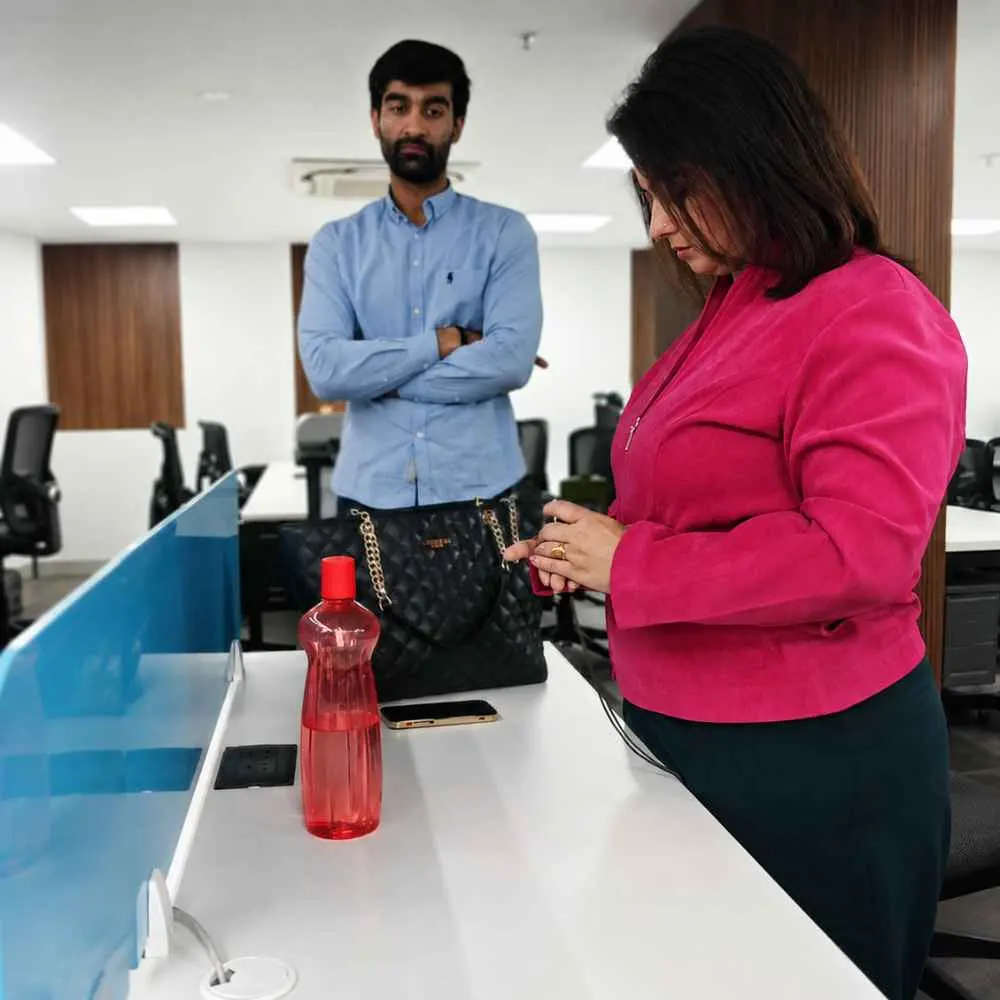
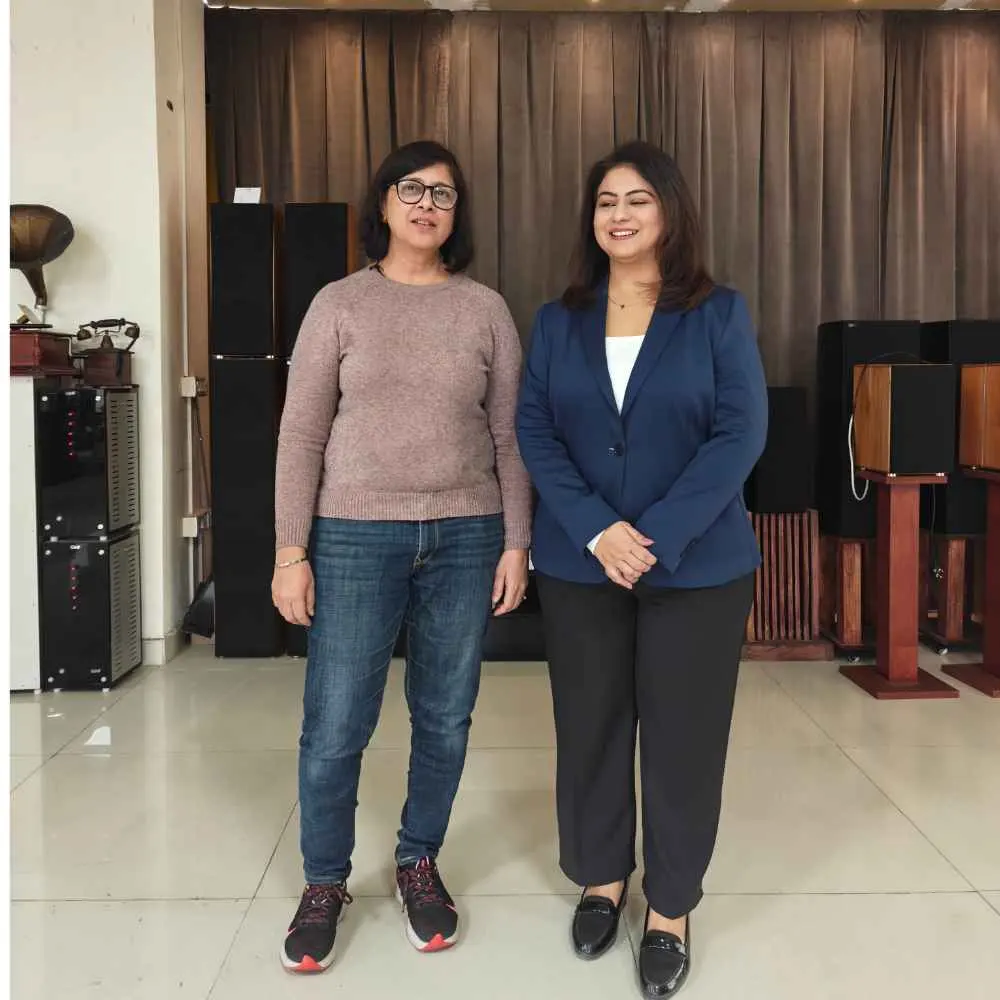
Families notice something that standard Vastu cannot easily explain. In the same house, following the same layout, one person sleeps well and another does not. One member thrives professionally while another feels permanently stuck. The house is identical — the experience is not. Astro-Vastu addresses exactly this. Because every direction is governed by a planet, and every member of a household has a different configuration of planetary strength in their birth chart, the same room can genuinely suit one person and work against another. A personalised home analysis with Kkomal Vasisht, an award-winning Vedic astrologer and IAF-certified Vastu consultant with 15+ years of practice and 15,000+ clients guided, maps each family member chart onto the directions of your home and produces practical, non-structural guidance: who should sleep where, which direction to face, which zones to prioritise, and what to leave alone. Consultations are held online by video call across India and worldwide, and in person across Greater Noida and Delhi NCR.
What You’ll Learn
- Why the Same House Affects Family Members Differently
- The Planet Behind Each Direction of Your Home
- Sleeping Direction — The Highest-Impact Correction
- Who Should Sleep in Which Room
- Children, Study and Focus
- The Zones That Matter Most in Any Home
- What Happens When a Room Cannot Be Changed
- Non-Structural Corrections for a Home
- How Many Charts Are Actually Needed
- Taking the Compass Reading Correctly
- What a Personalised Analysis Cannot Do
- Common Mistakes Families Make
- Myths Worth Clearing Up
- How the Analysis Is Done
- Home Analysis Across Greater Noida, Delhi NCR and Worldwide
- Who This Is For, and Who Should Start Elsewhere
- FAQs
- Get Your Consultation
At a Glance
- A personalised home analysis maps each family member birth chart onto the eight directions of the house, rather than applying one rule to everyone.
- It explains why the same house suits some members of a family and not others — each direction is ruled by a planet, and every chart is different.
- It covers sleeping direction, room allocation, study and work placement, and which zones matter most for each person.
- It needs date, time and place of birth for each member being analysed — without those it is ordinary Vastu.
- All guidance is non-structural: room allocation, bed direction, placement, colour, light and decluttering.
- A general Vastu review comes first; this is the personalised layer built on top of it.
Are You Facing These Problems?
- One family member sleeps badly in a room where everyone else is fine.
- You have followed standard Vastu advice and some of it seems to have made no difference.
- You are allocating bedrooms in a new home and do not know who should get which room.
- A child is struggling to focus and you want to know whether their room placement is a factor.
- One member of the household seems permanently stuck while others in the same house are doing well.
- You want to know your own favourable directions specifically, not a general rule.
- You live abroad or outside Delhi NCR and want a personalised home analysis remotely.
Why the Same House Affects Family Members Differently
This is the observation that brings most families to a personalised analysis, and it deserves a proper explanation rather than a vague one.
In Vastu, each of the eight directions is governed by a planet. In Jyotish, every person has their own pattern of planetary strength — some planets well placed and supportive, others weak or afflicted. Put those two facts together and the conclusion follows: a room in a direction ruled by a planet that is strong for you tends to feel supportive, and a room in a direction ruled by a planet that is difficult for you may not, even if the house itself is well built and generally Vastu-compliant.
This is why a family can follow identical advice with unequal results. It is not that standard Vastu is wrong — the general principles hold, and they remain the starting point for any assessment. What they cannot account for is the individual occupying the space. Astro-Vastu adds that layer.

The Planet Behind Each Direction of Your Home
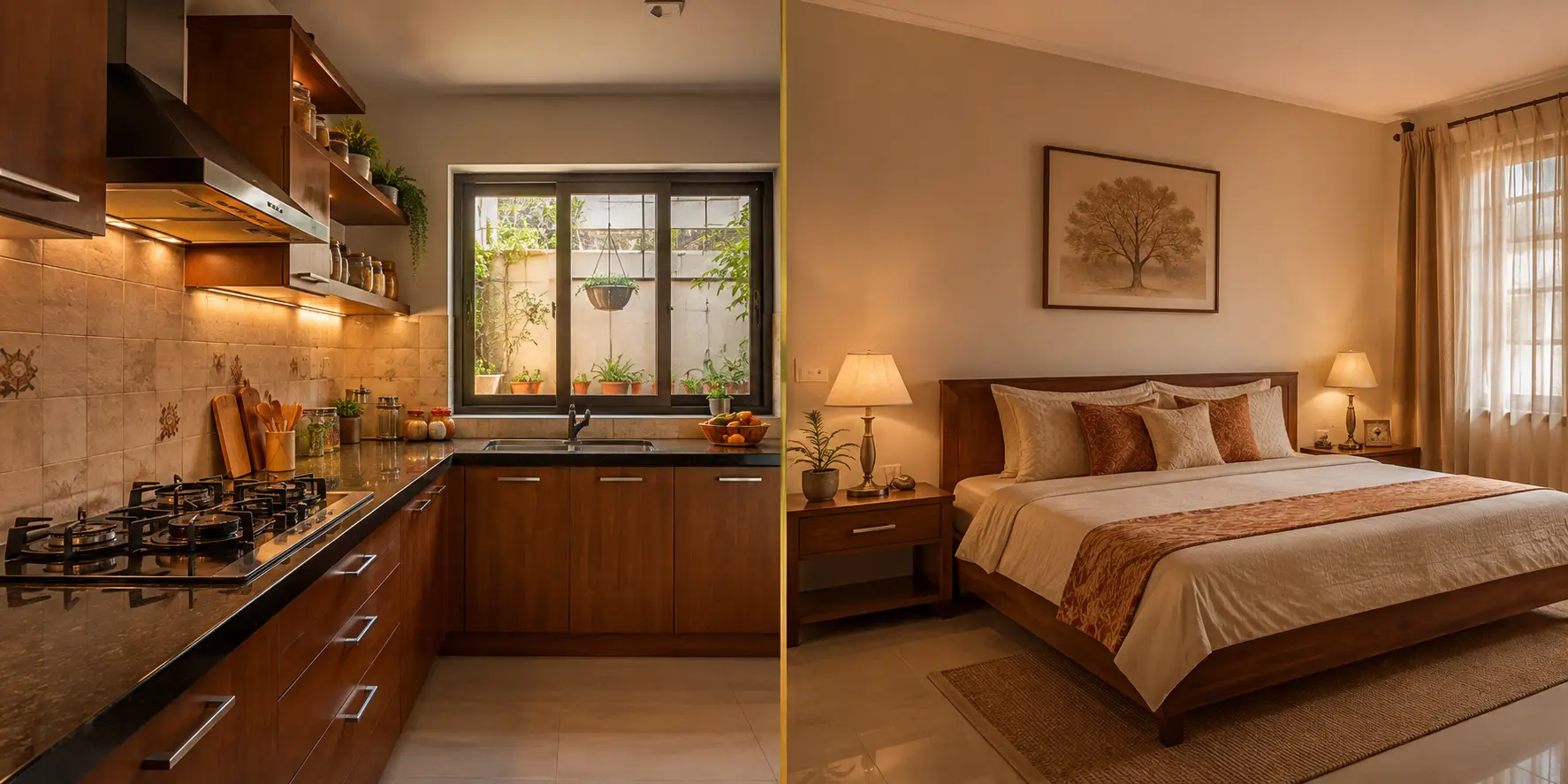
This mapping is what makes personalised guidance possible. Each direction carries both a traditional household function and a ruling planet.
| Direction | Ruling Planet | Traditional Household Zone |
|---|---|---|
| North-East | Jupiter | Prayer, clarity, water source — kept light and clear |
| East | Sun | Morning light, entrance, health and vitality |
| South-East | Venus | Fire zone — kitchen, cooking, energy |
| South | Mars | Rest, strength — suits heavier use |
| South-West | Rahu | Stability — master bedroom, heavy storage |
| West | Saturn | Dining, children rooms, sustained activity |
| North-West | Moon | Movement — guest room, storage, travel |
| North | Mercury | Wealth, opportunity — kept clear and active |
Sleeping Direction — The Highest-Impact Correction
If a household changes only one thing after a consultation, this is usually it, because it costs nothing and is felt quickly.
The standard principle is well established: sleep with your head toward the south, and the east is also considered good, particularly for students and for those wanting clarity in the morning. Sleeping with the head toward the north is traditionally avoided. That much is general Vastu and it applies broadly.
The personalised layer refines it. Where the general rule and the individual chart both point the same way, the correction is straightforward. Where a bedroom simply cannot accommodate the ideal orientation — which is common in flats — the chart helps decide which of the available options is the better compromise for that particular person, rather than leaving the family to guess.
Poor sleep is the complaint that brings this up most often, and it is worth saying that direction is only one factor among several. Clutter under the bed, a mirror facing it, a beam overhead, electronics and light all matter, and those are checked at the same time. A direction change alone rarely fixes sleep if the room is chaotic in other respects.

Who Should Sleep in Which Room
Room allocation is where personalised analysis earns its place, because it is a decision families make once and live with for years.
The traditional starting point is straightforward. The south-west, being the zone of stability and weight, is the master bedroom for the head of the household. The west and south generally suit children and older members. The north-west, associated with movement, suits guests, and traditionally suits a daughter of marriageable age, on the logic of the direction association with transition. The north-east is kept for prayer and clarity rather than as a bedroom, and the south-east, being the fire zone, is generally avoided for sleeping.
Where the charts come in is in the details and the exceptions. If the family has three bedrooms and four claims on them, the analysis indicates which allocation serves the household best overall. If a child in the west is struggling while a sibling in the same room is fine, that is exactly the kind of question the personalised layer is meant to answer. And where two members would both benefit from the same room, the honest answer is a compromise with reasons given, not a pretence that everyone can have the ideal.
Children, Study and Focus
Parents ask about this more than almost anything else, so it deserves specifics rather than generalities.
The traditional guidance for study is a desk placed so the child faces east or north while working, with a solid wall behind and open space in front rather than a wall directly at the face. The west and north-east are the zones usually favoured for study areas. Heavy shelving above the head is avoided, as is a study table directly beneath a beam.
The chart adds precision. A child whose Mercury is strong often responds well to a north-facing arrangement, which suits learning and communication; where Jupiter is the strength, the north-east and an east-facing desk tend to suit better. Where neither is particularly strong, the priority shifts to the fundamentals — a clear desk, good light, no bed in the same line of sight, and a room that is not doubling as a storage area.
One honest caution belongs here. Study difficulties have many causes, and the room is one of them rather than the explanation. Where a child is genuinely struggling, that deserves attention from parents and teachers directly. Vastu guidance sits alongside that, never in place of it.
The Zones That Matter Most in Any Home
Some directions carry more weight than others in a residence, and these four account for most findings.
North-East — Keep It Light
Ruled by Jupiter and treated as the spiritual and clarity zone. A heavy, cluttered or blocked north-east is one of the most common findings in homes where the family feels stuck. It should stay clean, light and as open as the layout allows — and it is where the puja area traditionally belongs. Turning it into a store room is the most frequent mistake in Indian flats.
South-West — Keep It Heavy
Ruled by Rahu and associated with stability and the head of the household. It wants weight: the master bedroom, the heaviest furniture, solid storage. A light, empty or missing south-west is commonly found in households that feel unsettled or where authority and decisions keep shifting.
North — Keep It Clear
Ruled by Mercury and associated with wealth and opportunity. It benefits from being clear, well-lit and active rather than blocked by heavy storage. Where Mercury supports a family member chart, activating this zone is often among the first priorities for them specifically.
South-East — The Fire Zone
Ruled by Venus and the traditional place for the kitchen. Where the kitchen sits elsewhere, the correction is usually about the direction faced while cooking and about colour, rather than relocating plumbing. A damp or disturbed south-east is frequently reported alongside financial friction.
What Happens When a Room Cannot Be Changed
Most homes cannot be rearranged to satisfy every principle, and any consultation that pretends otherwise is not being practical.
In flats particularly, the kitchen is where it is, the bathroom is where it is, and the bedrooms are fixed by the builder. Rented homes add another constraint entirely. The workable approach is to sort the findings by what can actually change: room allocation and bed direction can usually be changed today at no cost; furniture placement, colour and lighting within a week at modest cost; and structural matters are simply set aside as things to consider only if you renovate.
This is why a good report is a prioritised list rather than a catalogue of defects. A family that receives twenty findings with no ordering does nothing. A family that receives three things to do this weekend usually does them.
Non-Structural Corrections for a Home
Nothing here involves demolition. That is deliberate and it is what makes the approach usable in owned flats and rentals alike.
| Correction | What It Addresses | Effort and Cost |
|---|---|---|
| Change sleeping direction | Rest, personal alignment with a supportive direction | None, today |
| Reallocate bedrooms between members | Mismatch between a person and a zone | One weekend |
| Clear and light the north-east | Blocked clarity zone, family feeling stuck | A few hours |
| Add weight to the south-west | Instability, shifting authority | One afternoon |
| Clear the north of heavy storage | Blocked opportunity and wealth zone | A few hours |
| Colour through furnishings | Elemental imbalance in a zone | Low cost |
| Reposition study desk and facing | Focus and concentration | None to low |
| Remove mirror facing the bed | Disturbed rest | Immediate |
How Many Charts Are Actually Needed
Families often assume every member must be analysed, which is neither necessary nor proportionate.
In practice the head of the household anchors the analysis, since the property decisions and the household stability centre there. Beyond that, charts are worth adding for anyone with a specific concern being addressed — a member sleeping badly, a child struggling with study, someone whose career feels stuck. A family of five does not need five charts unless five specific questions exist.
Where several members are analysed and their favourable directions conflict, the resolution is by room allocation rather than by compromise across the whole house. Each person gets the best available zone for them; the shared areas follow general principles. That is both traditional and practical.
Taking the Compass Reading Correctly
Everything on this page depends on knowing which direction is which, and a surprising number of families get this wrong at the very first step — which quietly invalidates everything built on top of it.
The reading is taken standing at the centre of the home, facing the main entrance, with the compass held flat and level. What matters most is what is near it: mobile phones, laptops, steel almirahs, electrical panels and reinforced concrete columns all pull a compass needle noticeably. Take the reading two or three times from slightly different spots in the central area and see whether the numbers agree. If they swing by more than a few degrees, something nearby is interfering.
A phone compass app is usually adequate for a flat, provided it has been calibrated and you keep other devices away while reading. A physical compass is steadier. Either way, note the actual degree reading rather than just saying north-east, because a house facing 40 degrees and one facing 65 degrees are treated differently even though both might loosely be called north-east.
If you are sending the reading for a remote consultation, send the number along with a photograph of the compass in position. It takes a minute and it removes the most common source of error in the whole analysis.
What a Personalised Analysis Cannot Do
Being clear about the limits is what separates guidance from selling, and it belongs on the page rather than in the small print.
It cannot diagnose or treat anything medical. Where a family member is genuinely unwell, that belongs with a doctor, and no room change substitutes for treatment. It cannot resolve relationship difficulties, which have causes far beyond direction. It cannot compensate for financial decisions already made, or for a job that is genuinely wrong for someone.
What it can do is narrower and still worth having: it removes friction that the space itself is contributing, it gives each person the best available zone in the home rather than an arbitrary one, and it replaces guesswork about room allocation with reasoning. Families frequently report that the most valuable outcome was simply understanding why one member had been struggling in a room that suited everyone else — not because a correction transformed anything, but because the situation stopped feeling random.
Set the expectation there and the analysis is genuinely useful. Set it at guaranteed harmony and it will disappoint, as it should.
Common Mistakes Families Make
Most of these come from applying general advice indiscriminately or from doing too much at once.
Myths Worth Clearing Up
This area attracts both fear and overstatement.
| Common Belief / Myth | Practical Reality |
|---|---|
| A north-east bedroom is bad for everyone. | The north-east is kept light and is traditionally used for prayer rather than sleeping, but the reasoning is about function and clarity, not misfortune. |
| Every family member needs their chart analysed. | The head of the household anchors it; charts are added where a specific concern exists. A family of five rarely needs five charts. |
| If the house has a defect, the family will suffer. | Most homes have some defect. The question is which ones matter for the people living there and which have practical, non-structural corrections. |
| You must demolish to fix home Vastu. | Room allocation, bed direction, placement, colour and decluttering handle the overwhelming majority of findings. |
| Personalised Vastu can guarantee harmony at home. | It removes friction the space contributes. Relationships, health and circumstances are shaped by far more than direction. |
| Sun-sign Vastu tips online are the same thing. | Without birth time there is no ascendant, and without an ascendant there is no personalised mapping. Sign-based tips are general advice with a personal label. |
How the Analysis Is Done
The process is the same whether you join online from abroad or meet in person in Greater Noida.
- Share the Floor Plan and Compass Reading
A layout of the home with a compass reading taken at the centre, plus photographs of the main rooms.
- Share Birth Details
Date, time and place of birth for the head of the household and for anyone with a specific concern.
- Map the Directions
The eight zones of the home are established against the compass and assessed as they actually are.
- Read the Charts Against the Map
Each analysed member planetary strengths are mapped onto those zones to establish supportive and unsupportive directions.
- Room Allocation and Sleeping Direction
Practical recommendations on who occupies which room and which direction each should sleep facing.
- Prioritised Corrections
An ordered list, starting with what costs nothing and can be done today.
- Questions Answered
The family can ask follow-up questions, which no automated report allows.
Home Analysis Across Greater Noida, Delhi NCR and Worldwide
In-person visits are easiest across Greater Noida, Noida, Ghaziabad and the wider Delhi NCR region, where the home can be walked and read directly with a compass. For families anywhere else in India or abroad, the same analysis is delivered over a video call — you share a floor plan and compass reading, walk the rooms on camera, and receive the same prioritised guidance. Sessions are conducted in Hindi or English.
Who This Is For, and Who Should Start Elsewhere
It genuinely helps families where one member is affected differently from the rest, households allocating bedrooms in a new home, parents concerned about a child study area, and anyone who has followed general Vastu advice with uneven results.
Who should start elsewhere: if your home has never had any Vastu assessment at all, a general review comes first — the personalised layer builds on those fundamentals rather than replacing them. If you have one specific isolated concern, such as a north-east toilet, a focused remedy consultation is more proportionate than a full personalised analysis. And if what you are looking for is a guarantee of harmony or prosperity, no honest practitioner offers one.
Frequently Asked Questions
Because each direction is governed by a planet, and every person has a different pattern of planetary strength in their chart. A room in a direction ruled by a planet that is strong for you tends to feel supportive; the same room may not suit someone whose chart runs differently.
The general principle is head toward the south, with east also considered good, particularly for students. North is traditionally avoided. Where a room cannot accommodate the ideal, the chart helps decide which of the available options is the better compromise for that specific person.
Traditionally the south-west is the master bedroom for the head of the household, the west and south suit children and older members, and the north-west suits guests. The charts refine this where a specific concern exists or where allocation is genuinely contested.
No. The head of the household anchors the analysis, and charts are added for anyone with a specific concern being addressed — poor sleep, a child struggling to focus, a career that feels stuck. A family of five rarely needs five charts.
Facing east or north with a solid wall behind and open space in front, with the west and north-east the zones usually favoured. Avoid heavy shelving overhead and a desk under a beam. Where Mercury is strong in the child chart, north-facing often suits; where Jupiter is, east.
Yes. A general consultation assesses the building against Vastu principles. This adds the people — mapping each analysed member chart onto the directions, so room allocation and sleeping direction are personal rather than uniform.
If the home has never had any assessment, yes. The general review establishes whether the fundamentals are sound; the personalised layer builds on that. Where the basics are already in place, this is the natural next step.
No. Room allocation, bed direction, furniture placement, colour, light and decluttering handle the overwhelming majority of findings. Structural matters are noted as things to consider only if you renovate anyway.
Very. Because every correction is non-structural and reversible, it works fully in rented homes — room allocation, sleeping direction, placement and decluttering need no landlord permission and travel with you if you move.
The analysis indicates which allocation serves the household best overall and gives the reasoning, so the family can decide with information rather than guesswork. Where a compromise is required, it is stated as a compromise rather than dressed up as ideal.
It is the single most common finding in Indian flats and worth correcting early, since the north-east is the clarity zone. Clearing it, lighting it and keeping it clean is usually straightforward and among the first priorities.
It may help, but direction is one factor among several. Clutter under the bed, a mirror facing it, a beam overhead, electronics and light all matter and are checked together. A direction change alone rarely fixes sleep in a room that is chaotic otherwise.
Sleep and the general feel of a room are usually where a shift is noticed first, often within a few weeks. Broader changes take longer and depend on much besides the house. Making one correction at a time also lets you see what actually helped.
No. It removes friction that the space itself contributes, which is a real and worthwhile thing. Relationships, health and circumstances are shaped by far more than direction, and any practitioner promising guaranteed harmony is overstating the tool.
Yes, with no loss of depth. You share a floor plan and compass reading, walk the rooms on camera, and receive the same prioritised guidance. In-person visits are easiest across Greater Noida and Delhi NCR.
Ready to Talk This Through?
Whether you are buying a new property, renovating, or simply want a second, honest opinion — Kkomal provides accurate, no-demolition guidance tailored to your unique layout and situation, in person across Greater Noida & Delhi NCR, and online for the rest of India and abroad.
📞 +91 99531 11782 | ✉ kkomalvasisht@gmail.com
Vastu for Business Growth and Career Success — as per Your Kundli Personalised Vastu Report by Date of Birth — What You Actually Receive Vastu Remedies as per Your Birth Chart — Directional Activation Kundli / Birth Chart Nakshatra Finder Lo Shu Grid